What is Die Cutting? Process, Materials and Custom Die Cut Components
Quick Answer
Die cutting is a manufacturing process that uses a shaped die to cut, kiss-cut, laminate, or form flexible materials into functional parts for sealing, bonding, insulation, shielding, cushioning, and thermal control.
Key Takeaways
Die cutting converts flexible materials into precise functional components.
Common materials include adhesive tapes, foams, films, mesh, copper foil, graphite, silicone, rubber, and insulation films.
Custom die cut components are widely used in electronics, EV batteries, medical devices, robotics, drones, AI servers, and industrial equipment.
The right die-cutting process depends on material, tolerance, quantity, thickness, adhesive structure, and assembly method.
A complete RFQ should include drawings, material requirements, dimensions, tolerance, quantity, application, and quality expectations.
Abstract
Die cutting is one of the most widely used converting processes for flexible functional materials. Instead of simply cutting shapes, industrial die cutting creates engineered parts that help finished products bond, seal, insulate, cushion, shield, conduct, dissipate heat, or protect critical components.
For buyers, engineers, and product designers, understanding how die cutting works can make supplier communication faster and more accurate. This guide explains the definition of die cutting, the main process types, common materials, application fields, advantages, limitations, and how to request a quote for custom die cut components.
What is Die Cutting?
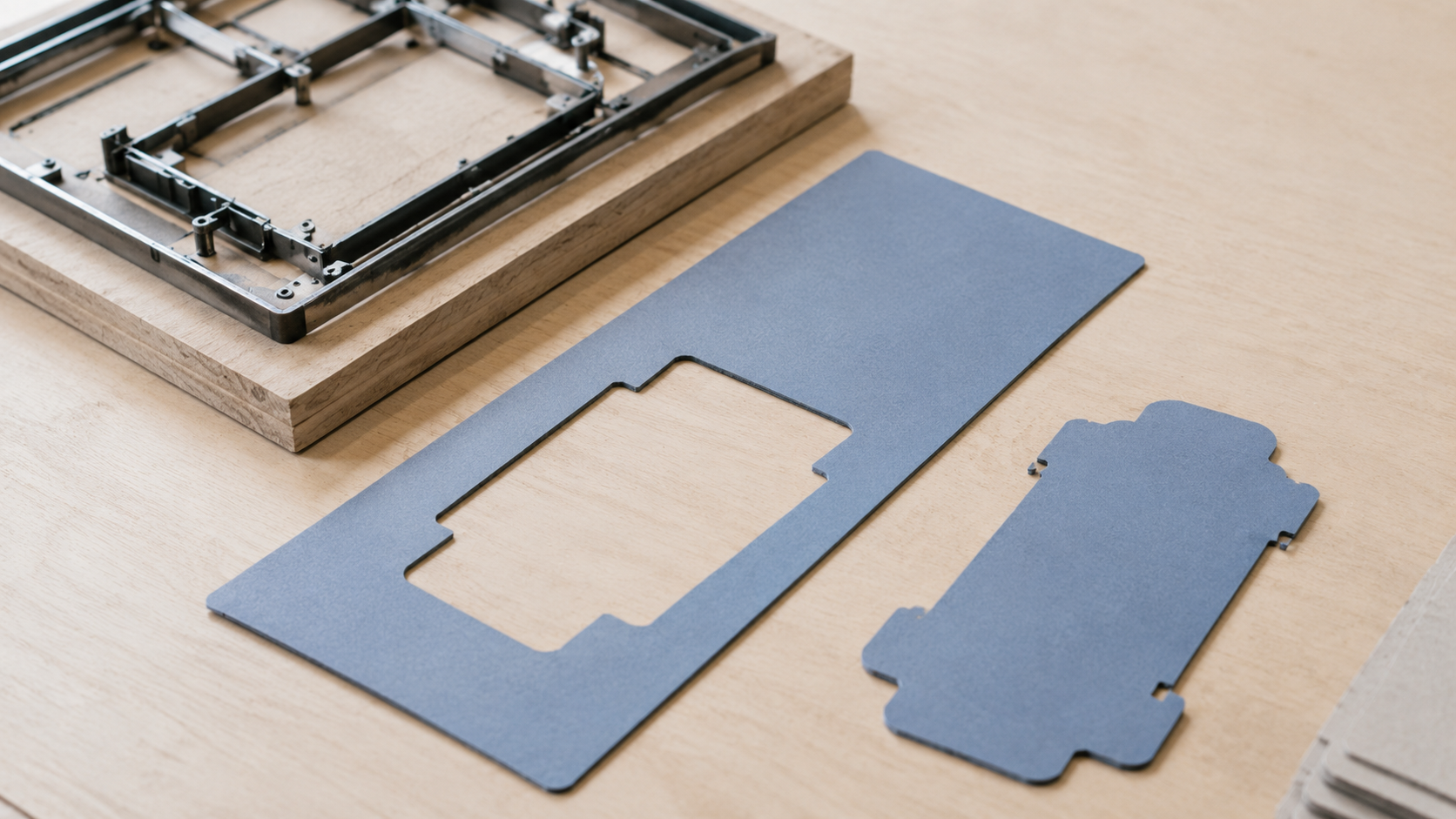
Die cutting is a manufacturing and converting process that uses a custom-shaped tool, called a die, to cut flexible or semi-rigid materials into specific shapes. These materials can include adhesive tapes, foams, plastic films, conductive foils, mesh, graphite sheets, silicone, rubber, insulation materials, and protective films.
In industrial production, die cutting is not only about shape cutting. A die cut part often performs a practical function inside a finished product. It may bond two surfaces, block dust, seal moisture, absorb vibration, transfer heat, shield electromagnetic interference, insulate electrical components, or protect a surface during assembly.
This is why precision die cutting is commonly used in electronics, automotive, medical devices, communication equipment, new energy products, robotics, drones, smart home devices, and industrial control systems.
Die Cutting Definition
A clear definition for industrial buyers is:
Die cutting is the process of converting selected materials into application-ready components with controlled shape, thickness, adhesive structure, tolerance, release liner, and packaging format.
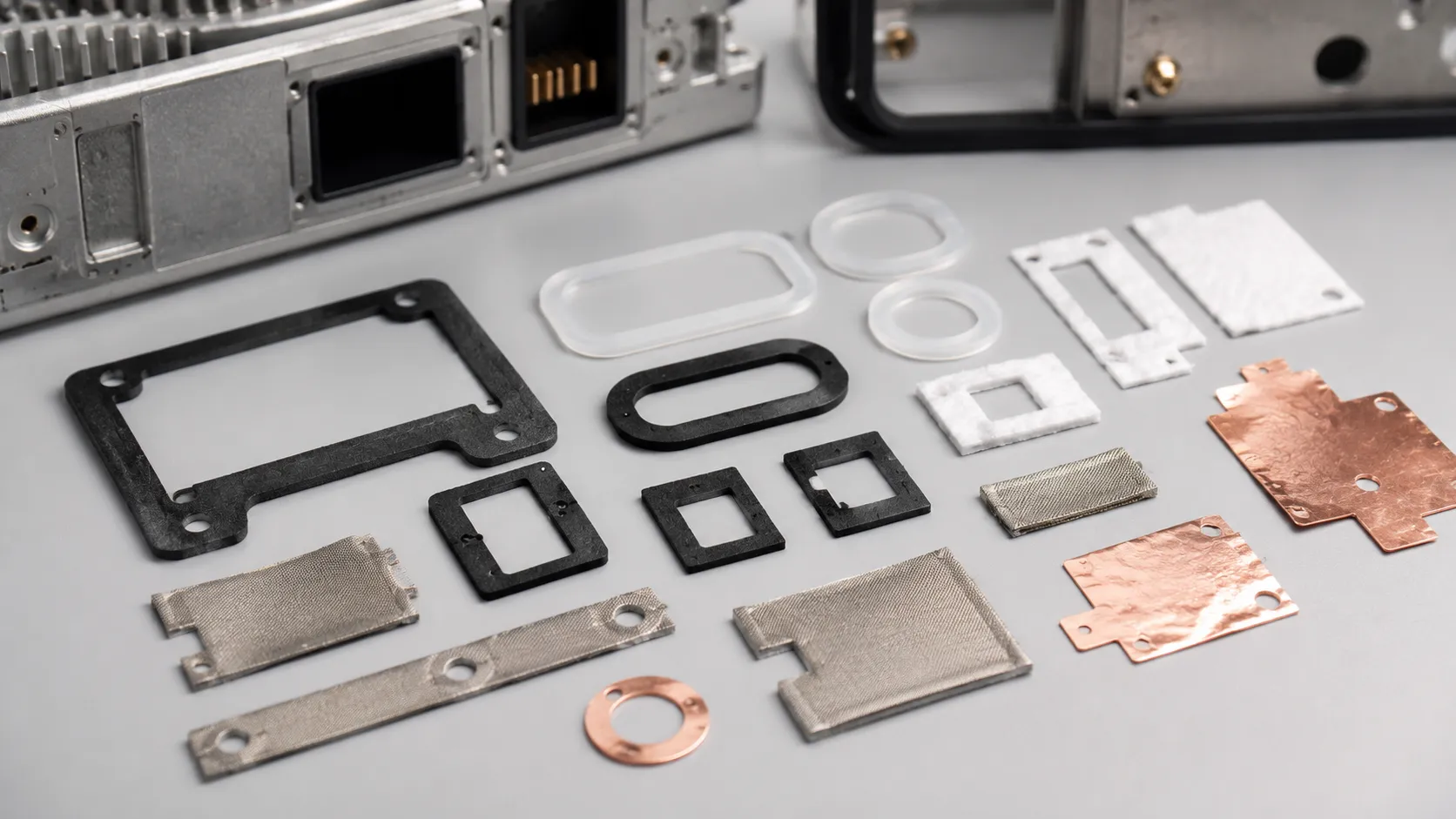
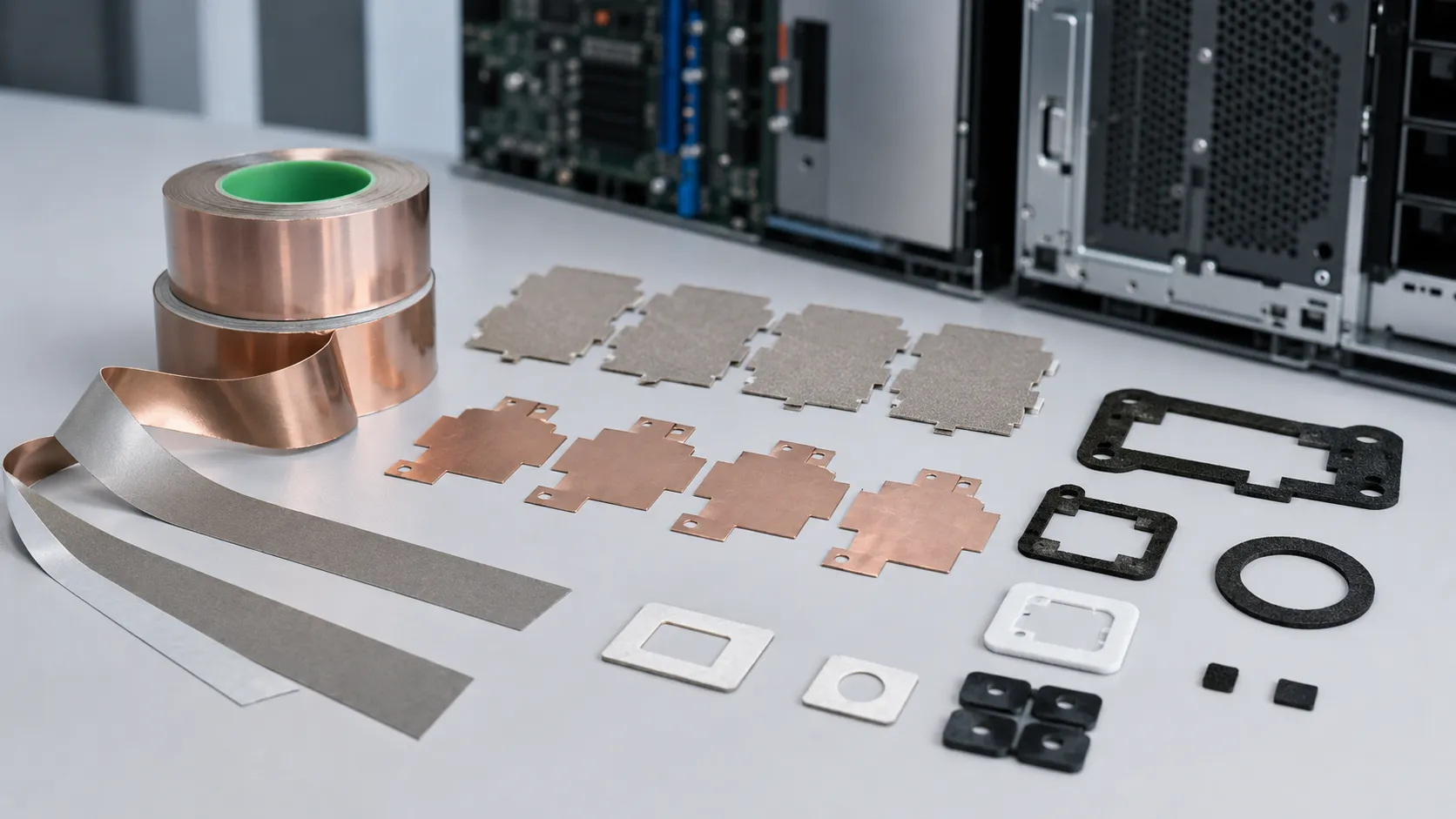
The finished parts are often called die cut components. Examples include adhesive pads, foam gaskets, dustproof mesh, insulation films, copper foil parts, conductive fabric gaskets, graphite heat spreaders, waterproof sealing gaskets, protective films, and printed labels.
Die Cutting vs. Custom Die Cutting
Standard die cutting usually produces repeated shapes based on an existing design. Custom die cutting starts from a customer’s drawing, application requirement, material target, and assembly environment.
A custom die cutting supplier may help optimize the design for tolerance, material yield, adhesive performance, liner release, automated assembly, and production stability. For OEM buyers, custom die cut components are valuable because they reduce manual assembly work, improve consistency, and allow multiple functions to be integrated into one part.
How Does the Die-Cutting Process Work?
A typical die-cutting manufacturing process includes requirement review, material preparation, lamination, cutting, waste removal, inspection, packaging, and delivery. For complex parts, several material layers may be laminated before cutting, such as foam, adhesive, PET film, conductive foil, and release liner.
Step | Process | Purpose |
1 | Requirement review | Confirm drawing, function, material, tolerance, and quantity |
2 | Material selection | Choose tape, foam, film, foil, graphite, mesh, or insulation material |
3 | Lamination | Combine adhesive, carrier, foam, liner, or functional layers |
4 | Die cutting | Cut the material into the required shape |
5 | Waste removal | Remove excess material and keep usable parts on liner or sheet |
6 | Inspection | Check dimensions, appearance, adhesion, and function |
7 | Packaging | Pack as sheet, roll, tray, or custom format for assembly |
For precision die cutting, engineering control is important at every stage. Material tension, tool condition, lamination pressure, temperature, release liner stability, and inspection method can all affect final quality. This is especially important for small holes, narrow borders, thin adhesive tapes, and multi-layer structures.
A simplified custom production flow is:
Customer drawing → Engineering review → Material recommendation → Sample making → Sample approval → Mass production → Full inspection → Packaging and delivery
Main Types of Die Cutting
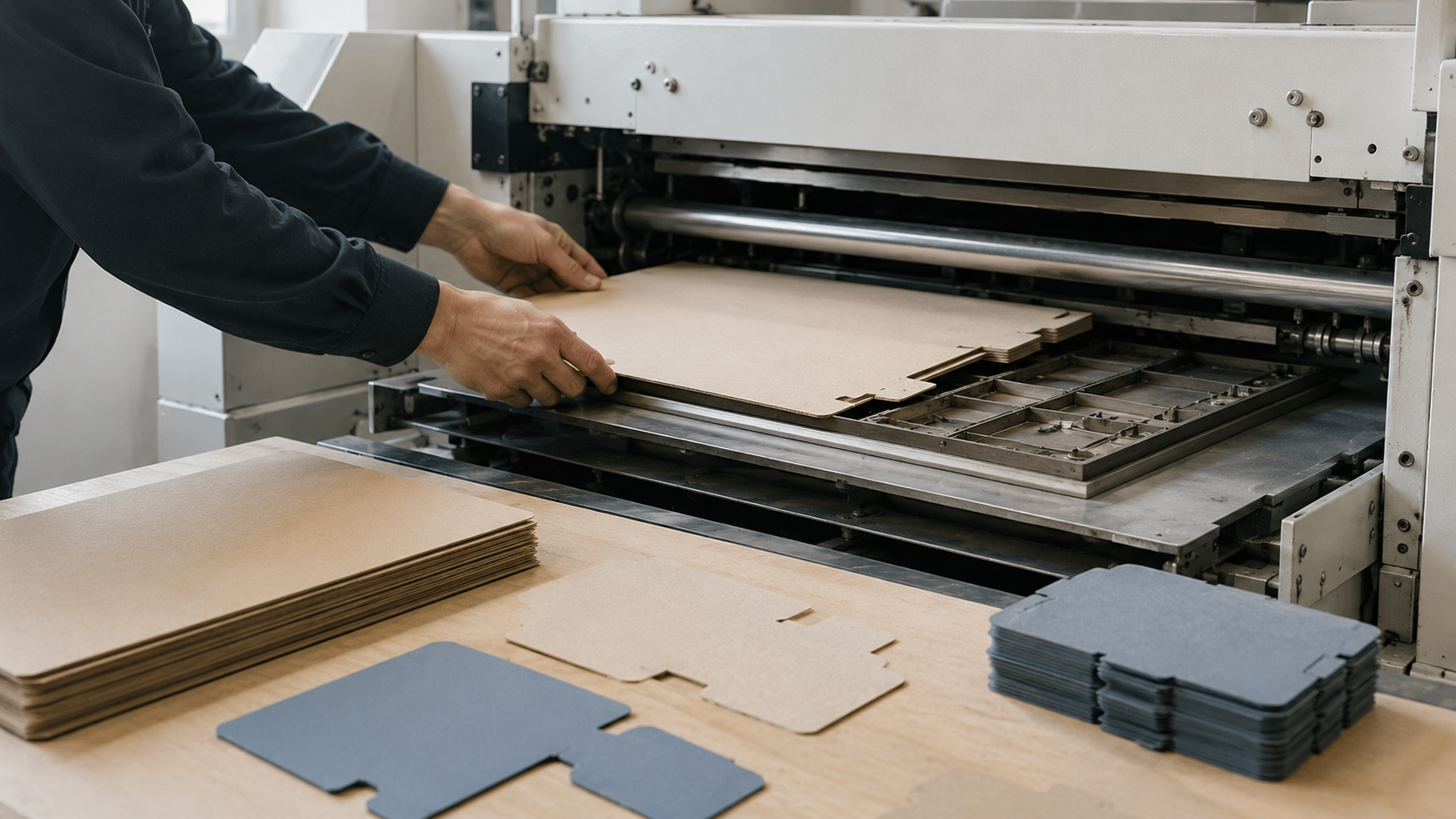
Different die-cutting methods are used depending on the material, quantity, tolerance, shape, thickness, and delivery schedule.
Process | Best For | Typical Advantage |
Rotary die cutting | Roll materials, high-volume production, multi-station lamination | Fast, efficient, and consistent |
Flatbed die cutting | Prototypes, lower-volume orders, thicker or larger parts | Flexible and suitable for many materials |
Kiss cutting | Adhesive parts on release liner | Cuts the top layer without cutting through the liner |
Laser cutting | Prototypes, complex shapes, no-tooling samples | Fast sample development and flexible geometry |
Rotary Die Cutting
Rotary die cutting uses cylindrical dies to cut materials as they move through a roll-to-roll machine. It is suitable for high-volume production, continuous materials, multi-layer lamination, and stable repeatability.
This process is commonly used for adhesive tapes, protective films, foam gaskets, insulation films, and other roll-format materials.
Flatbed Die Cutting
Flatbed die cutting uses a flat die and press system to cut materials. It is often suitable for prototypes, small batches, thicker materials, larger parts, and projects requiring higher process flexibility.
Flatbed die cutting is useful when a project needs engineering adjustment before entering high-volume production.
Kiss Cutting
Kiss cutting is widely used for adhesive-backed parts. The blade cuts through the top material but leaves the release liner intact. This allows the finished part to stay on a liner, making it easier to peel, place, package, or use in automated assembly.
Common Die Cut Materials
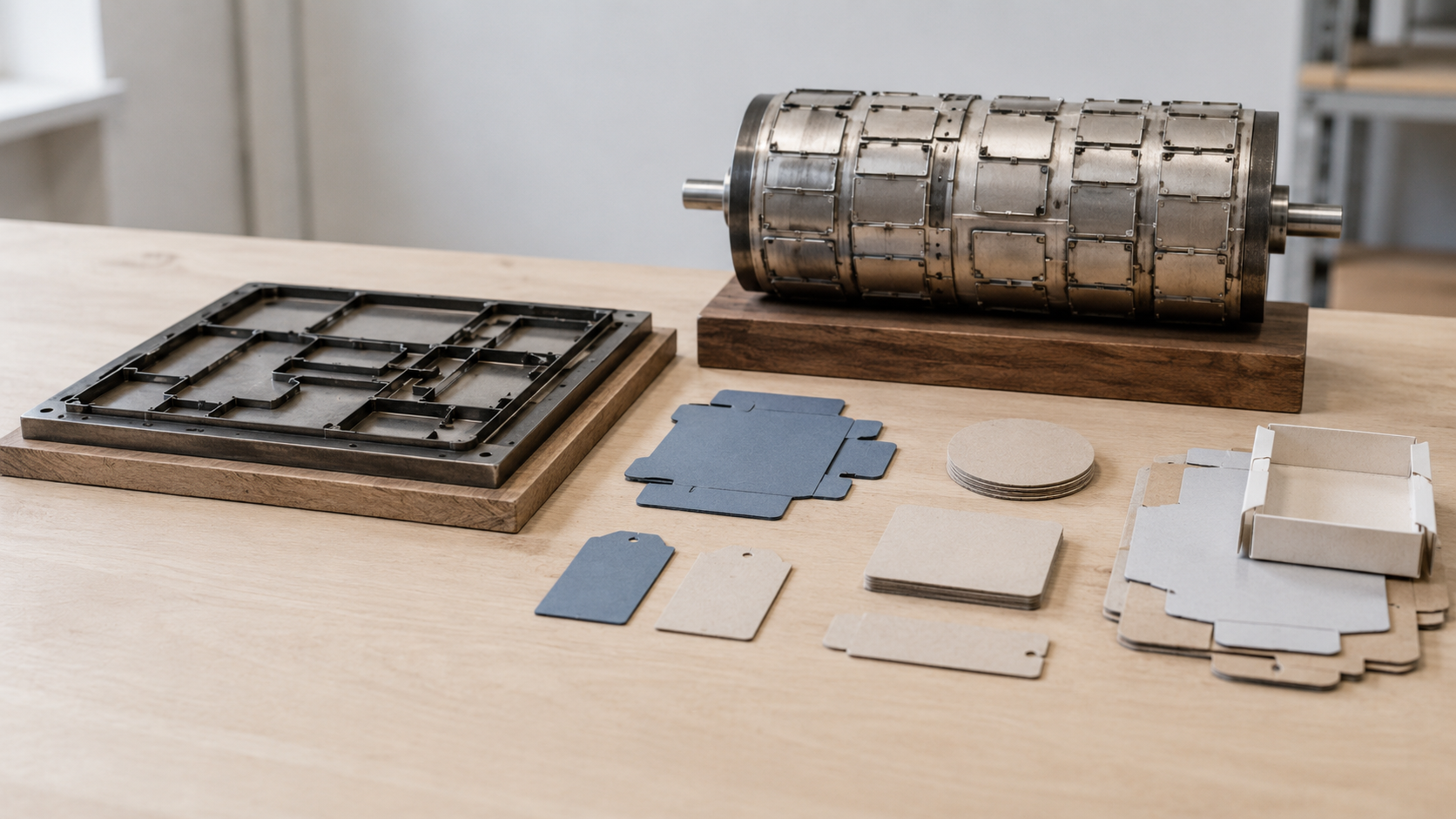
Many flexible functional materials can be converted into die cut materials. The material is usually selected based on the final function, not only the part shape.
Material Category | Common Function | Example Components |
Adhesive tapes | Bonding, fixing, mounting | Die cut adhesive tape, double-sided tape pads |
Foams | Sealing, cushioning, damping | Foam gaskets, dustproof pads, compression pads |
PET / PI / PC films | Insulation, protection, spacing | Electrical insulation films, protective films |
Copper / aluminum foil | Conductivity, grounding, EMI shielding | Conductive foil parts, grounding tabs |
Conductive fabric / foam | EMI shielding and grounding | EMI shielding gaskets, conductive foam pads |
Graphite / thermal pads | Heat spreading and thermal transfer | Die cut thermal interface materials |
Mesh and membrane | Dustproof, waterproof, acoustic venting | Speaker mesh, vent membranes, dust filters |
Silicone and rubber | Sealing, waterproofing, compression | Waterproof gaskets, sealing pads |
Adhesive Tapes, Foams and Films
Die cut adhesive tape is widely used in electronics assembly because it provides clean bonding, repeatable placement, and efficient assembly. It can be designed with positioning holes, tabs, release liners, finger lifts, or roll format for easier manual or automated installation.
Foams are often used when the part must absorb tolerance variation, fill gaps, seal dust, reduce noise, or protect fragile components. PET, PI, and PC films are common for electrical insulation, heat resistance, spacing, surface protection, and printed functional labels.
Conductive, Thermal and Insulation Materials
As electronic devices become smaller, faster, and more powerful, conductive and thermal materials are becoming more important.
Conductive foams, copper foils, aluminum foils, conductive fabrics, and conductive cloth tapes are often used for EMI shielding, grounding, and electrical continuity. Graphite sheets, thermal pads, and thermal interface materials help manage heat transfer and hot spots. Insulation films help protect circuits, batteries, modules, and internal structures from electrical risk.
These materials are commonly used in smartphones, laptops, smart devices, AI servers, communication equipment, industrial control systems, EV battery packs, and medical devices.
What Are Custom Die Cut Components Used For?
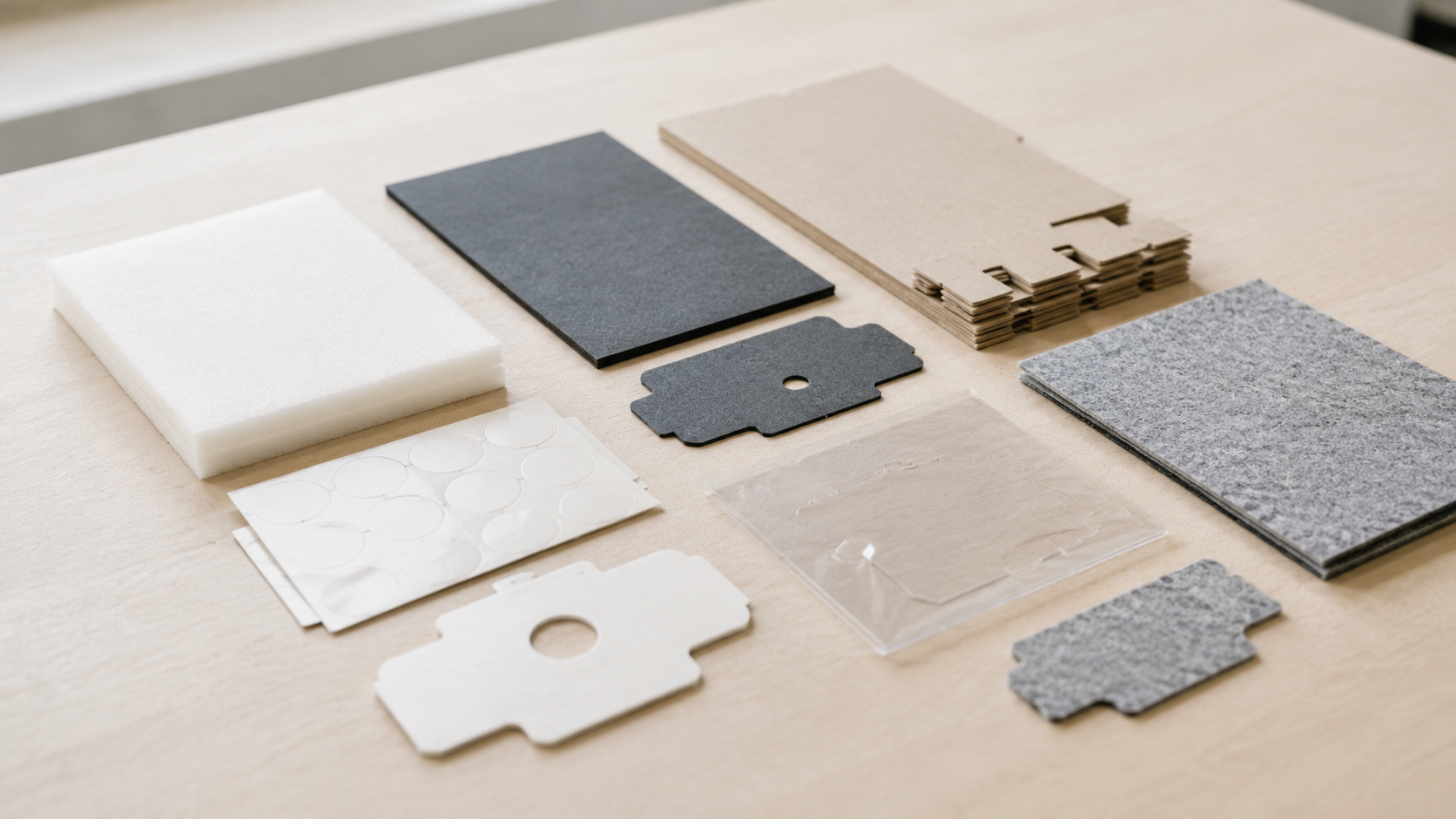
Custom die cut components are used wherever product designers need a clean, repeatable, thin, lightweight, and functional part. Their value is especially clear when a product requires precise assembly, stable quality, and reliable material performance.
Consumer Electronics
In consumer electronics, die cut parts support bonding, dustproofing, waterproofing, cushioning, light blocking, thermal conduction, and EMI shielding. Typical products include smartphones, tablets, laptops, TWS earphones, smart watches, VR devices, smart home products, and portable electronic devices.
Common components include:
Adhesive tape pads
Foam cushioning pads
Speaker mesh and dustproof mesh
Graphite heat spreaders
Copper foil grounding parts
PET and PI insulation films
Protective films and printed labels
EV Batteries and New Energy Applications
In EV battery packs and energy storage systems, die cut parts may support insulation, sealing, thermal management, flame-retardant design, cushioning, and protective functions.
Common EV battery die cut components include insulation sheets, foam pads, thermal interface materials, sealing gaskets, protective films, battery pack labels, and adhesive fixing parts.
Medical Devices
In medical device die cutting, material cleanliness, traceability, adhesive stability, and dimensional consistency are important. Common parts include medical adhesive tapes, films, foam pads, protective layers, wearable device components, and diagnostic equipment assembly parts.
AI, Robotics, Drones and Industrial Control
AI servers, robotics, drones, and industrial control equipment often need lightweight, compact, and durable functional parts. These products may face higher thermal loads, EMI challenges, vibration, dust, and strict space limitations.
Precision die cutting services can help engineers create parts that fit limited spaces, reduce assembly complexity, and combine multiple functions in one component. For example, a single die cut part may combine adhesive bonding, insulation, heat spreading, and easy-release liner design.
Advantages and Limitations of Die Cutting
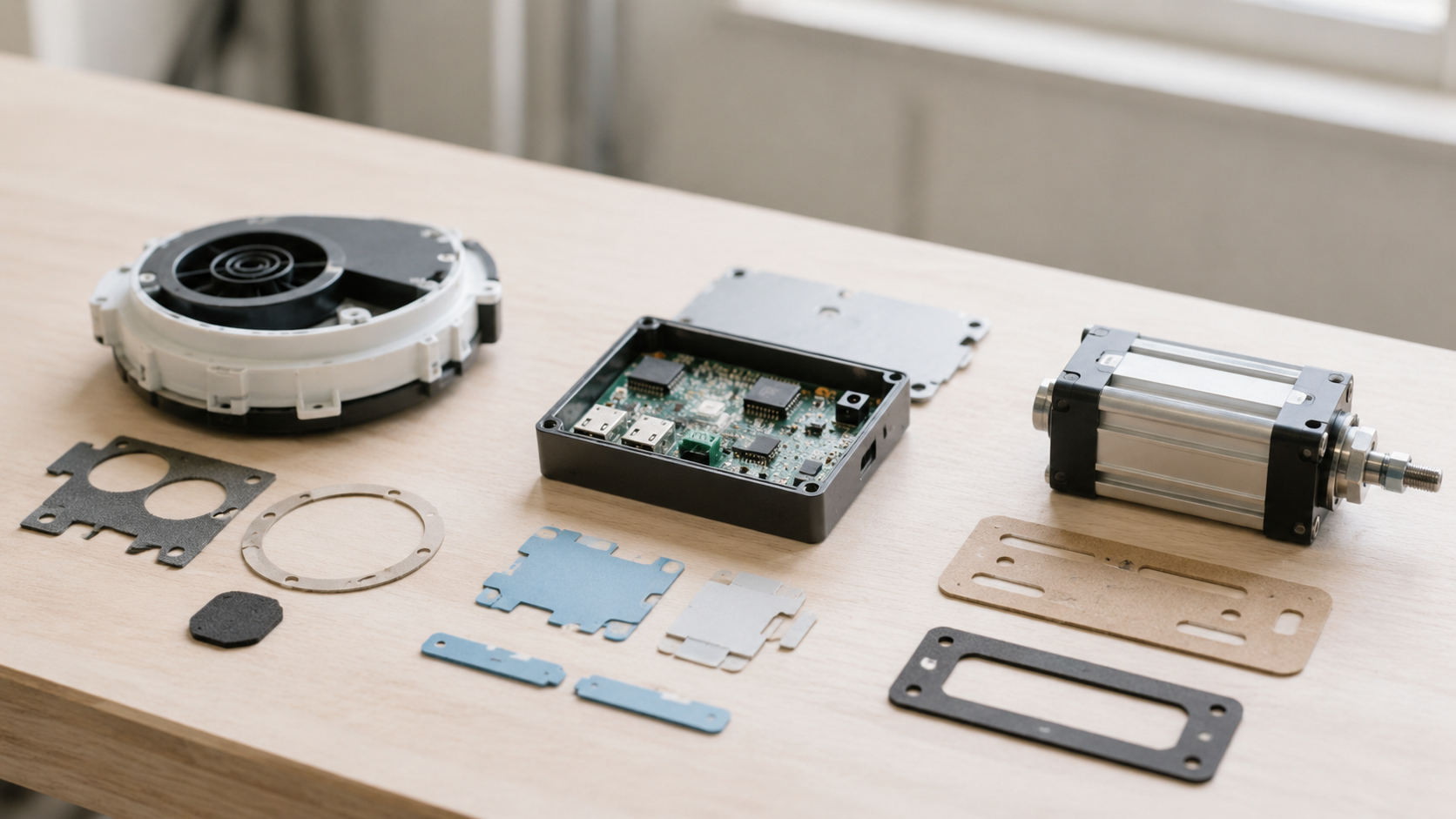
Advantages of Die Cutting
Die cutting offers several important advantages for OEM and contract manufacturing projects:
High repeatability for mass production
Suitable for thin, flexible, and multi-layer materials
Efficient for adhesive-backed components
Lower unit cost at scale
Supports roll-to-roll or sheet-format production
Helps improve assembly speed and product consistency
Can integrate bonding, sealing, insulation, shielding, and protection into one part
Limitations of Die Cutting
Die cutting is highly effective, but it is not suitable for every material or every design. Buyers should consider the following limitations:
Tooling may be required before mass production.
Very thick, hard, brittle, or rigid materials may need another cutting method.
Tolerance depends on material behavior, geometry, and process control.
Adhesive overflow, liner release, and waste removal must be considered during design.
Extremely small holes or narrow borders may require engineering review before quoting.
The best results usually come from early communication between the customer and the die cutting supplier.
How to Request a Custom Die Cutting Quote?
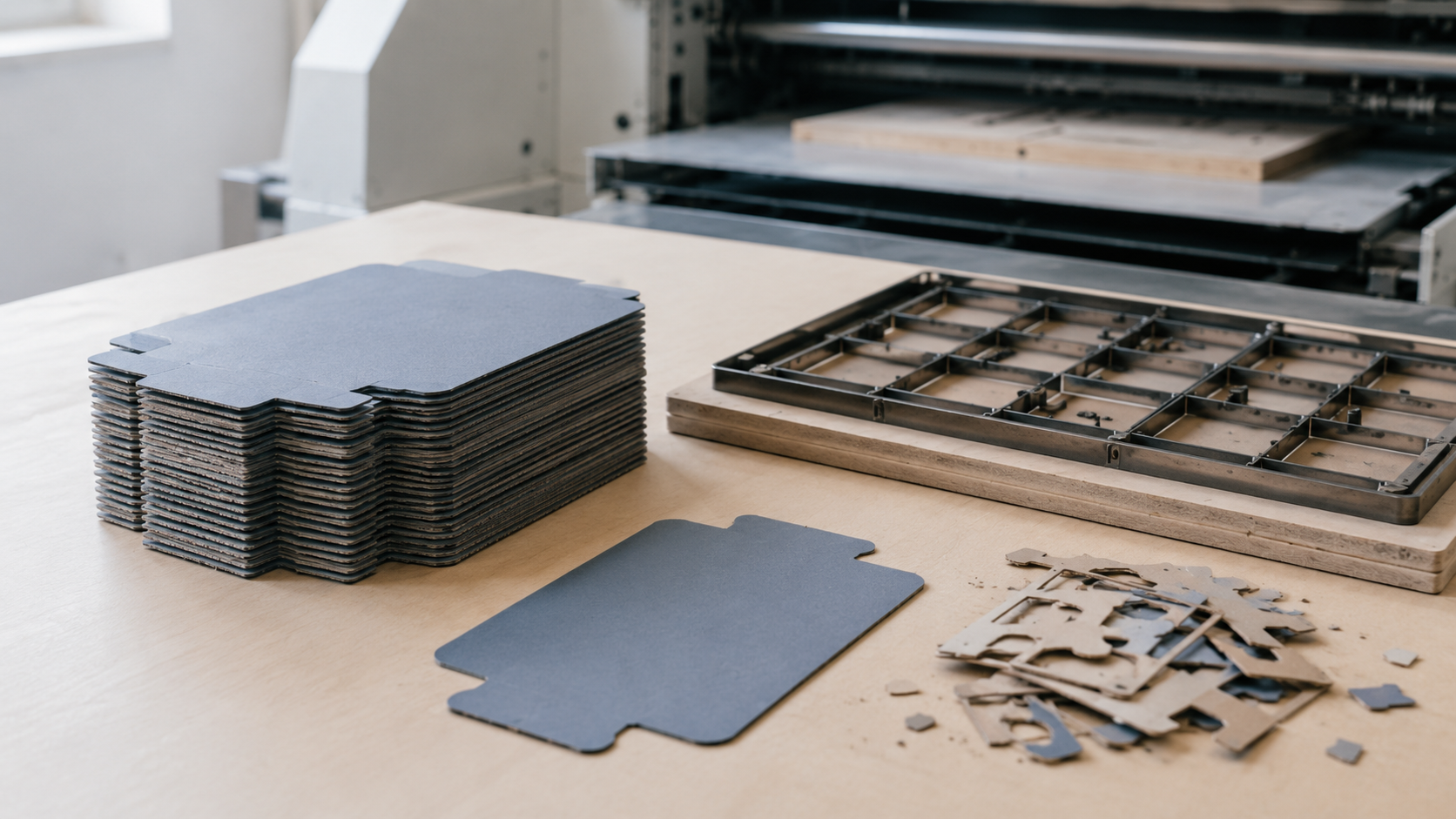
To receive an accurate quote for custom die cutting services, prepare as much project information as possible. A complete RFQ helps the supplier evaluate materials, process feasibility, tolerance, tooling, sampling time, mass production cost, and delivery schedule.
RFQ Item | What to Provide |
Drawing | PDF, DXF, DWG, STEP, or AI file |
Material | Material type, brand preference, thickness, or performance target |
Function | Bonding, sealing, insulation, EMI shielding, thermal management, cushioning |
Quantity | Prototype, pilot run, or mass production volume |
Tolerance | Critical dimensions and acceptable tolerance range |
Application | Device type, use environment, temperature, compression, and assembly method |
Packaging | Roll, sheet, tray, liner format, tabs, or automated assembly requirements |
Quality needs | Inspection standard, certification, test report, or traceability requirement |
If the material is not fixed, share the application problem first. A capable supplier can recommend alternatives based on performance, cost, lead time, and production stability.
Why Work With Xinyusheng for Custom Die Cut Components?
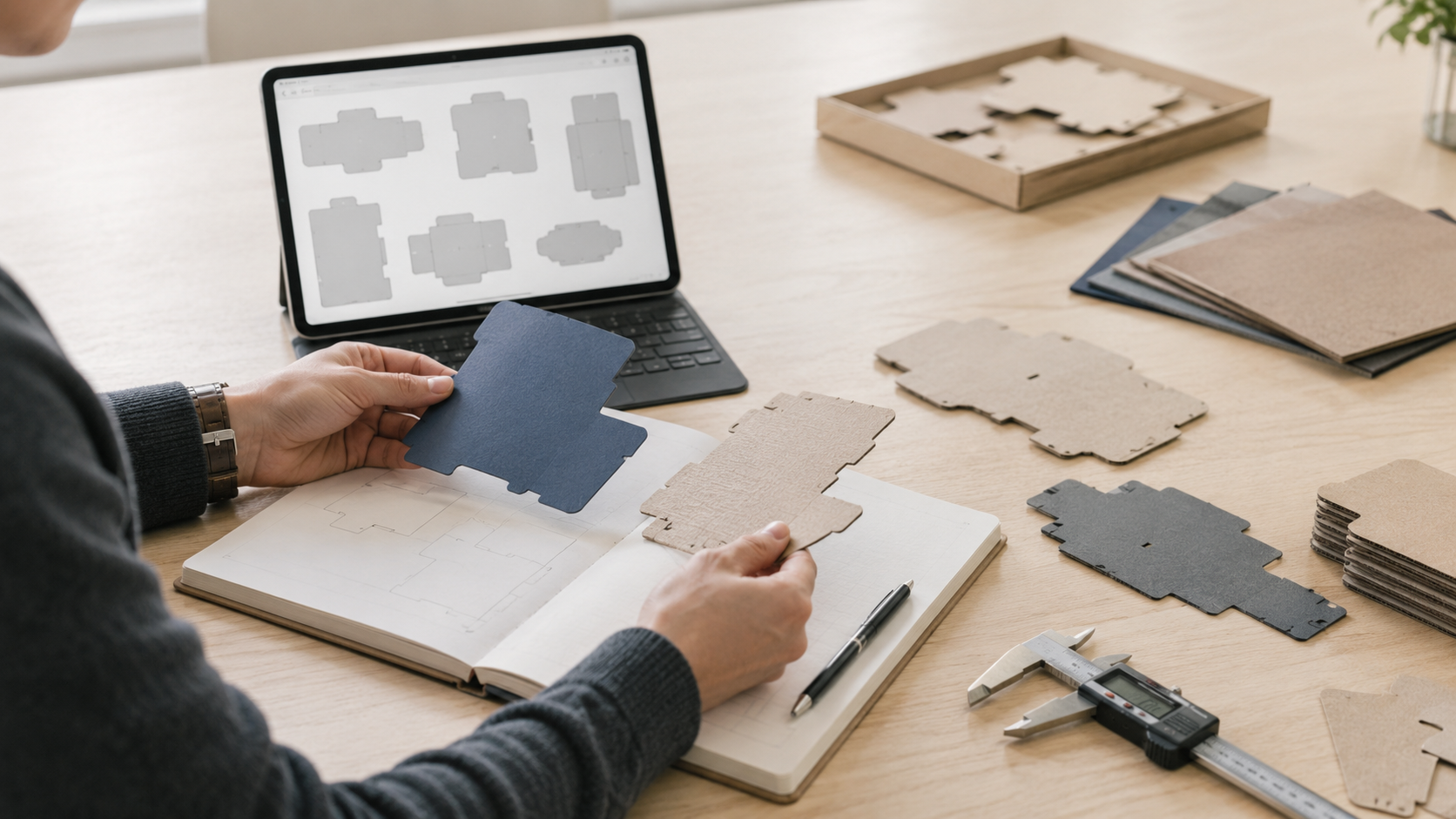
Xinyusheng provides custom precision die cutting solutions for functional components used in electronics, new energy, medical devices, robotics, drones, industrial control, smart home products, communication equipment, and other demanding applications.
Our capabilities cover material selection, engineering review, sample development, precision die cutting, lamination, inspection, and packaging. We support custom parts made from adhesive tapes, foams, films, mesh, copper foil, conductive materials, thermal materials, insulation films, silicone, rubber, and protective materials.
For buyers who need reliable custom die cut components, early engineering support can reduce sampling risk, improve assembly efficiency, and shorten the path from concept to mass production.
FAQs About Die Cutting
What materials can be die cut?
Common materials include adhesive tapes, foams, PET, PI, PC films, mesh, silicone, rubber, copper foil, aluminum foil, conductive fabric, graphite sheets, thermal pads, insulation films, and protective films.
Is die cutting only for paper or labels?
No. Industrial die cutting is widely used for electronic, automotive, medical, energy storage, communication, robotics, drones, and industrial components. Labels are only one small part of the application range.
What is the difference between die cutting and kiss cutting?
Die cutting usually cuts through the material. Kiss cutting cuts the top material layer while leaving the release liner intact. Kiss cutting is commonly used for adhesive parts supplied on sheets or rolls.
When should I choose custom die cutting?
Choose custom die cutting when the part must match a specific drawing, assembly space, material performance, tolerance, liner structure, or packaging format.
What makes a die cut component precise?
Precision depends on material stability, tool quality, equipment accuracy, lamination control, waste removal, environmental control, and inspection. For thin, adhesive, or multi-layer materials, engineering review is essential before mass production.
What files are needed for a die cutting quote?
Common RFQ files include PDF, DXF, DWG, STEP, or AI drawings. Buyers should also provide material requirements, thickness, tolerance, quantity, application, and packaging expectations.
Conclusion
Die cutting is more than a shape-cutting process. It is a practical manufacturing method for creating functional parts that help products bond, seal, insulate, shield, dissipate heat, cushion, and protect.
For buyers sourcing custom die cut components, the best result comes from combining clear drawings, suitable materials, realistic tolerances, and an experienced engineering review.
Xinyusheng supports custom precision die cutting from requirement review and material selection to sampling, production, inspection, and delivery. Upload your drawing or share your application requirements to start a custom solution.
Table of Contents
Related news
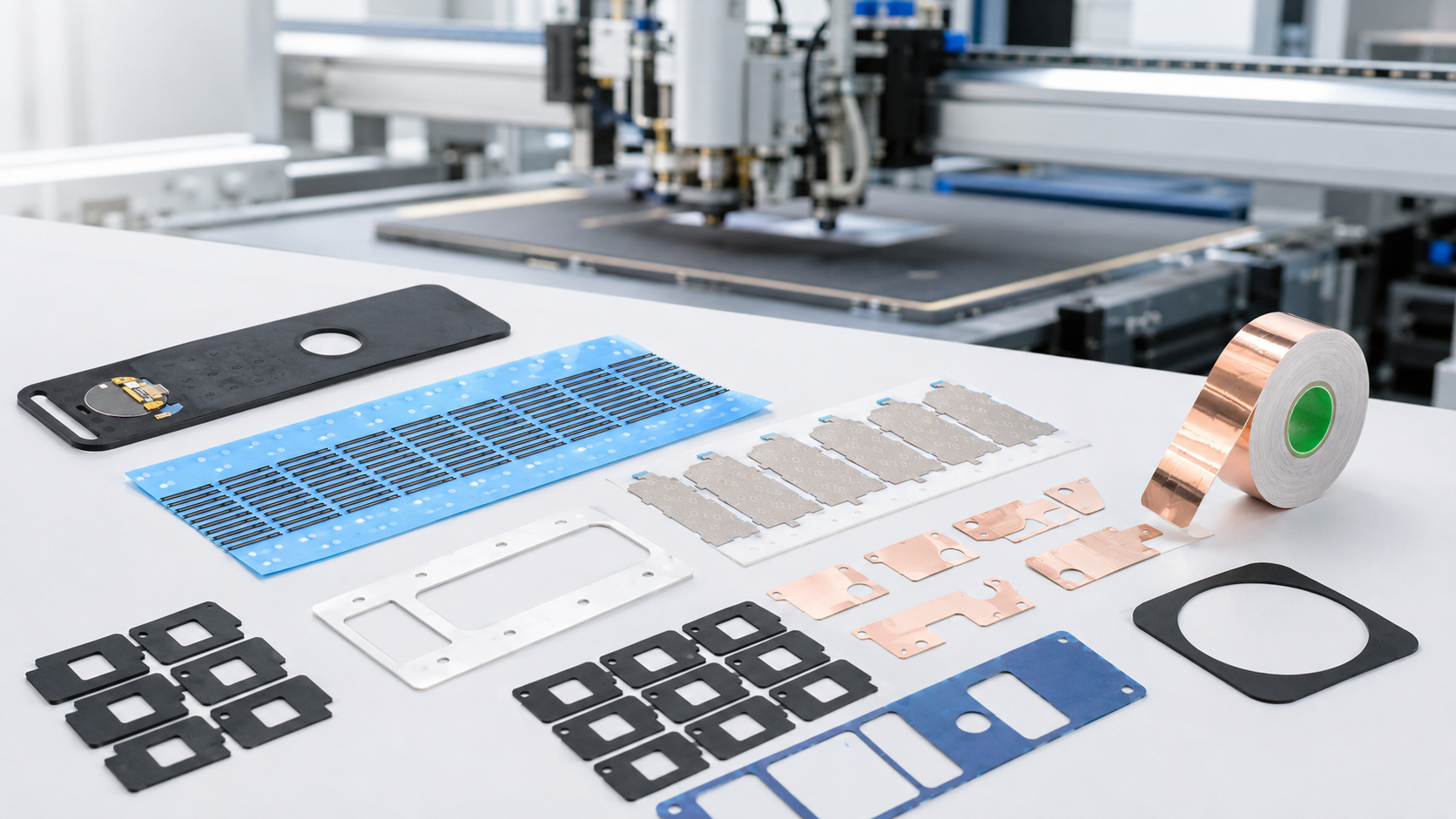
Company News
What Is Custom Precision Die Cutting? What Types of Custom Functional Components Is Xinyusheng Suitable For?
May 14,2026
Discover More
Company News
Custom Die Cut Gaskets: Materials, Design and Applications
July 17,2026
Discover More
Company News
EMI Conductive Die Cutting: Materials, Shielding and Applications
July 14,2026
Discover More
