What is the Manufacturing Process of Die Cutting?
Quick Answer
The die cutting manufacturing process converts flexible materials into custom parts through raw material preparation, lamination, die cutting, liner processing, waste removal, inspection, packaging and delivery.
Key Takeaways
Die cutting is a converting process used to make functional parts from tapes, foams, films, foils, mesh, graphite and insulation materials.
A typical die cutting process includes raw material preparation, lamination, cutting, waste removal, inspection and packaging.
Precision die cutting depends on material stability, tooling, machine control, registration, liner design and quality inspection.
Rotary die cutting is usually better for roll materials and high-volume production, while flatbed die cutting is more flexible for samples, small batches and thicker parts.
B2B buyers should provide drawings, material requirements, tolerance, application, quantity and packaging needs before requesting a quote.
Abstract
The die cutting manufacturing process is more than cutting a material into a shape. In B2B manufacturing, it is a controlled converting workflow that turns functional materials into application-ready components for bonding, sealing, insulation, cushioning, EMI shielding, thermal management and protection.
For electronics, EV batteries, medical devices, robotics, drones, AI servers, smart home devices and industrial equipment, die cut parts must fit the product structure, meet tolerance requirements and support stable assembly. This article explains how die cutting works from raw materials to final inspection, what process types are commonly used, which materials can be converted and what buyers should prepare before requesting custom die cutting services.
What is the Die Cutting Manufacturing Process?
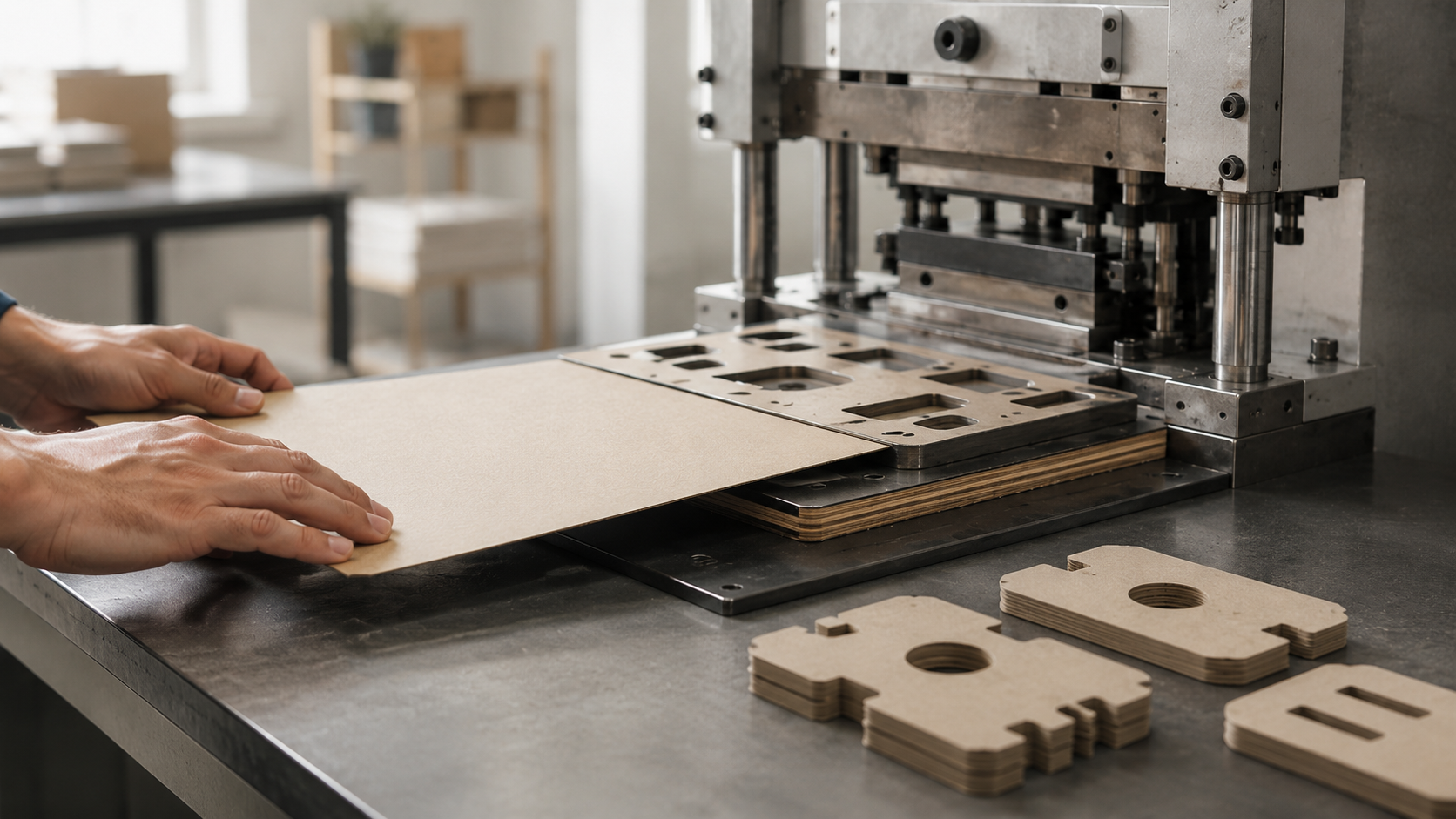
The die cutting manufacturing process is a converting method that uses a shaped tool, called a die, to cut, kiss-cut, laminate or form flexible materials into designed parts. These parts are often supplied on release liners, sheets, rolls or trays so they can be easily assembled into final products.
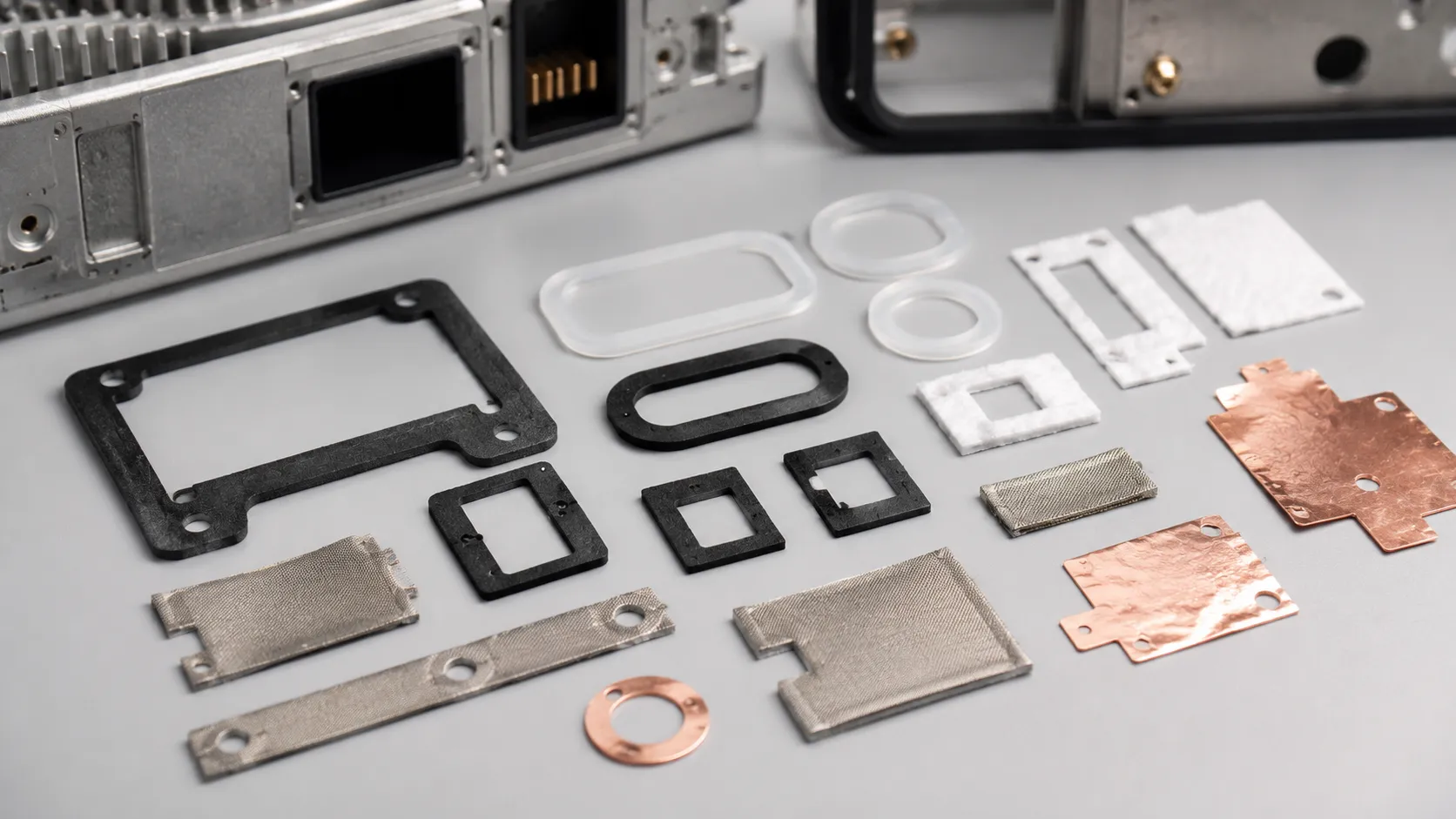
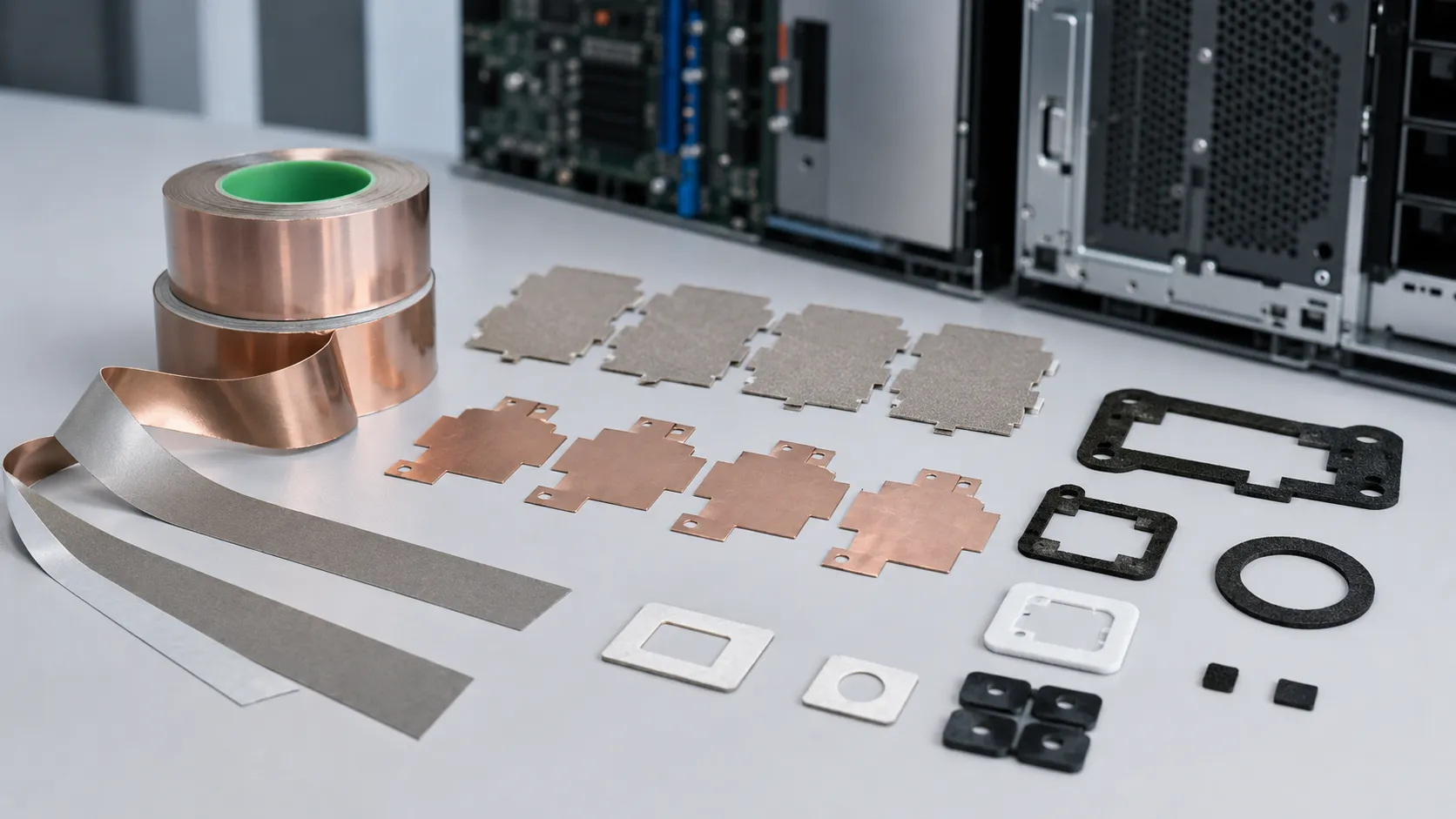
In industrial manufacturing, die cutting is used to process adhesive tapes, foams, PET films, PI films, PC sheets, silicone, rubber, copper foil, aluminum foil, conductive fabric, mesh, graphite sheets, thermal interface materials and insulation materials.
Die Cutting Process Definition
A practical B2B definition is:
The die cutting process converts selected materials into precise functional components through preparation, lamination, cutting, waste removal, inspection and packaging.
The final parts may look simple, but their functions are often critical. A die cut component may bond a display, seal an enclosure, reduce vibration, block dust, insulate a battery cell, conduct electricity, spread heat or shield EMI.
Why Process Control Matters in B2B Manufacturing?
In precision die cutting, process control affects both product performance and assembly efficiency. Small changes in adhesive thickness, material tension, cutting pressure, liner release or waste removal can cause deformation, burrs, adhesive overflow, poor alignment or unstable assembly.
For B2B buyers, this means the supplier should not only cut the shape. A reliable supplier should review the drawing, understand the function, choose suitable materials, recommend the right process, confirm samples and control quality before mass production.
Step-by-Step Die Cutting Process Flow
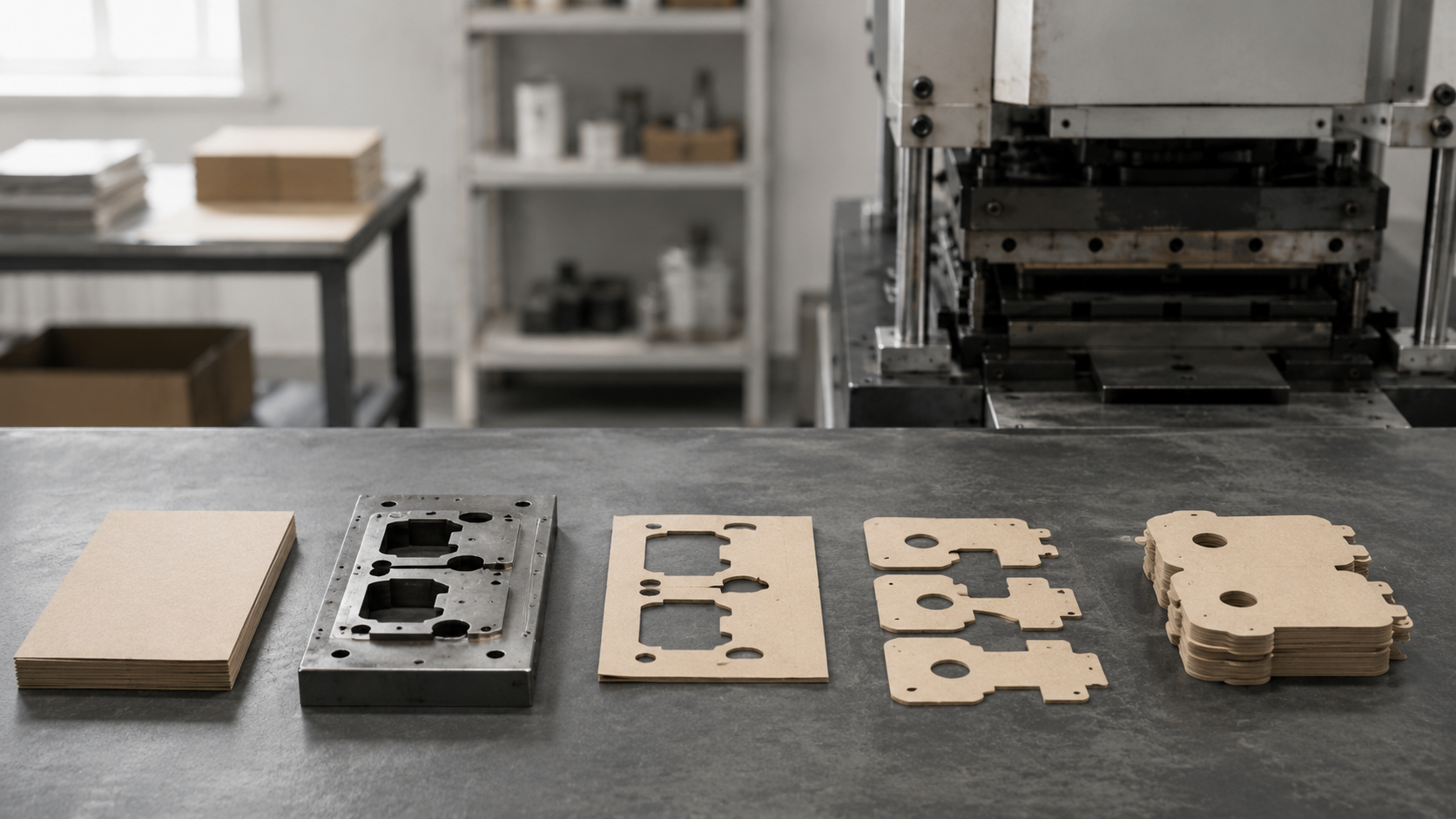
A typical custom die cutting process can be summarized as follows:
Step | Process Stage | Purpose |
1 | Raw material preparation | Prepare tapes, foams, films, foils, mesh or thermal materials |
2 | Incoming inspection | Check material appearance, thickness, adhesive quality and basic specifications |
3 | Lamination | Combine adhesive, foam, film, liner or functional layers |
4 | Inner frame cutting | Cut internal holes, frames or partial structures |
5 | Release liner processing | Add or replace release paper or release film |
6 | Registration cutting | Align layers and cut the final shape |
7 | Waste removal | Remove unwanted matrix or scrap material |
8 | Semi-finished cutting | Cut sheets, rolls or intermediate formats |
9 | Final inspection | Check dimensions, appearance, adhesion, liner and function |
10 | Packaging and delivery | Pack parts according to assembly or shipping requirements |
A simplified flow is:
Material review → Raw material preparation → Lamination → Die cutting → Waste removal → Inspection → Packaging → Delivery
Raw Material Preparation and Incoming Inspection
The process starts with material selection and preparation. Materials may be supplied in rolls or sheets, depending on thickness, structure and production method.
Common die cut materials include:
Double-sided adhesive tape
Foam tape and cushioning foam
PET, PI and PC insulation films
Copper foil and aluminum foil
Conductive fabric and conductive foam
Graphite sheets and thermal pads
Dustproof mesh and waterproof membranes
Silicone and rubber sealing materials
Incoming inspection is important because material variation can affect final cutting accuracy. Thickness, adhesive uniformity, surface cleanliness, release liner condition and material flatness should be checked before production.
Lamination, Die Cutting and Waste Removal
Many functional parts require die cutting and lamination services before final cutting. For example, a part may combine foam, adhesive, PET film and release liner, or graphite, insulation film and adhesive backing.
Lamination helps create the required structure, but it also adds process risks. If pressure, tension or alignment is not controlled, the part may shift, wrinkle or delaminate.
After lamination, the material is cut into the required shape. Depending on the design, the process may include through cutting, kiss cutting, inner-hole cutting, outer-frame cutting, tab cutting or multi-step registration cutting.
Waste removal is the stage where excess material is removed from the web or sheet. For adhesive-backed parts, poor waste removal can cause lifting, tearing, adhesive strings or missing parts. This is why material behavior and release liner selection are important during engineering review.
Final Inspection, Packaging and Delivery
After cutting and waste removal, die cut components must be inspected before shipment. Inspection may include appearance checks, dimensional checks, liner checks, adhesive checks and packaging verification.
For high-reliability applications such as electronics, EV batteries, medical devices and industrial equipment, common quality steps include:
Quality Step | What It Controls |
IQC incoming inspection | Raw material quality |
First article inspection | First-piece dimensional and appearance confirmation |
IPQC in-process inspection | Process stability during production |
QC final inspection | Finished part quality |
QA outgoing inspection | Shipment quality and packaging status |
Packaging should also match the customer’s assembly process. Parts may be supplied in rolls, sheets, trays, stacked sets or custom liner formats.
Common Types of Die Cutting Processes
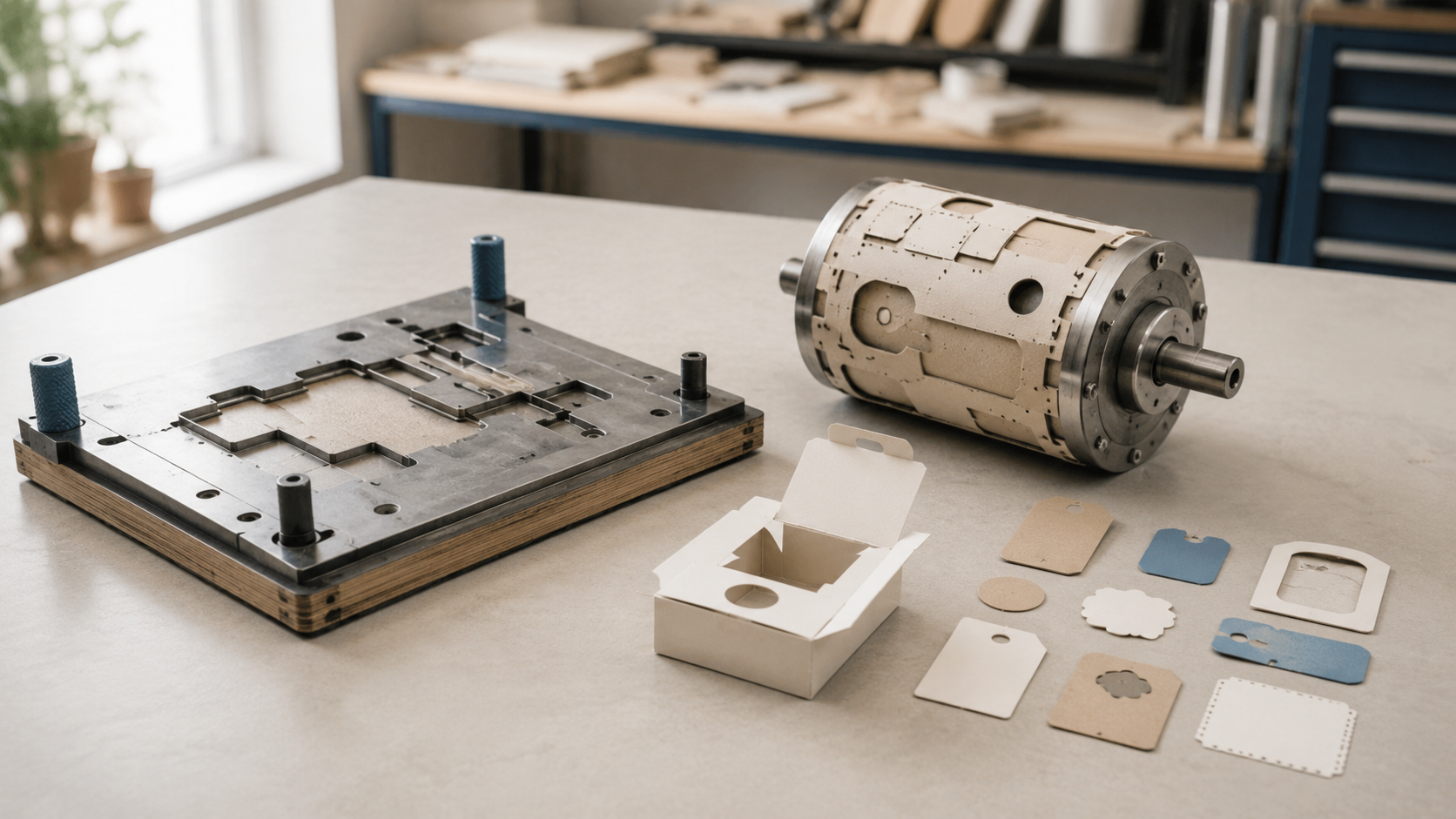
Different die cutting processes are selected based on material format, volume, tolerance, thickness, part size and assembly method.
Process Type | Best For | Key Advantage |
Rotary die cutting | Roll materials and high-volume production | Fast, continuous and efficient |
Flatbed die cutting | Samples, small batches, thicker or larger parts | Flexible and adaptable |
Kiss cutting | Adhesive-backed parts on release liner | Easy peeling and assembly |
Laser cutting | Prototypes and complex shapes | No tooling and fast design changes |
Rotary Die Cutting
The rotary die cutting process uses cylindrical dies to cut material as it passes continuously through a roll-to-roll machine. It is suitable for high-volume production, thin flexible materials, multi-layer lamination and stable repeat orders.
Rotary die cutting is often used for adhesive tapes, protective films, insulation films, conductive foils, graphite sheets, foam tapes and EMI shielding materials.
Flatbed Die Cutting
The flatbed die cutting process uses a flat die and press system to cut materials. It is often better for samples, low-to-medium volumes, sheet materials, thicker foams, larger parts and projects that still need design adjustment.
For B2B buyers, flatbed die cutting is useful during early product development because it allows material, shape and assembly testing before mass production.
Kiss Cutting
Kiss cutting cuts through the top material layer while keeping the release liner intact. This process is widely used for adhesive-backed components because it allows operators or automated equipment to peel the part easily from the liner.
Kiss cutting is common for die cut adhesive tape, foam pads, protective films, labels, insulation films and assembly-ready adhesive parts.
Materials Used in Die Cutting Manufacturing
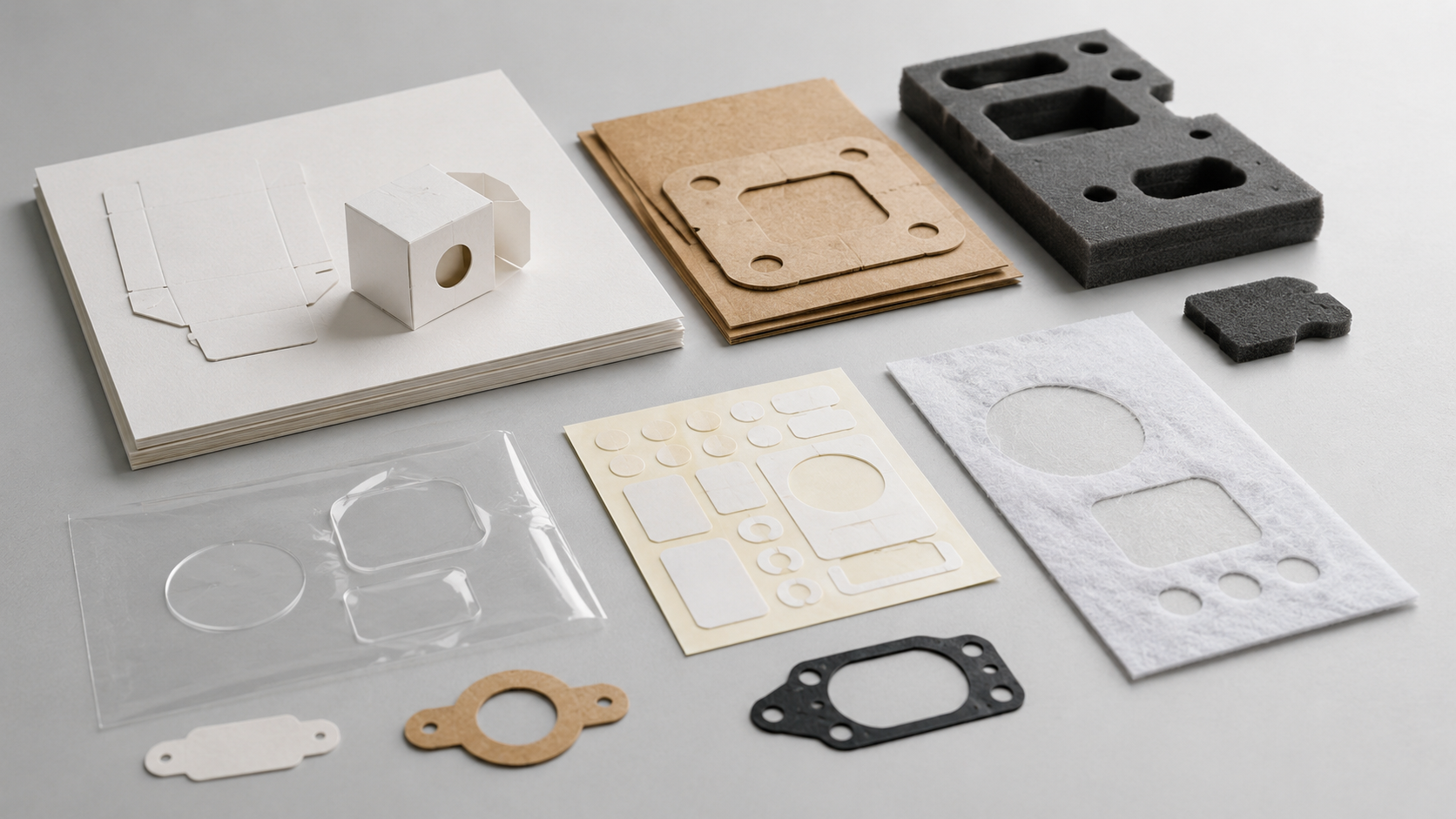
Material selection depends on function, not just shape. A sealing part may require compressible foam. An insulation part may need PET or PI film. A grounding part may need copper foil or conductive fabric. A thermal part may need graphite or thermal interface material.
Function | Material Options | Common Parts |
Bonding | Double-sided tape, PSA tape, foam tape | Adhesive pads, mounting parts |
Sealing | Foam, silicone, rubber | Waterproof gaskets, dustproof pads |
Insulation | PET, PI, PC films | Battery insulation sheets, circuit protection films |
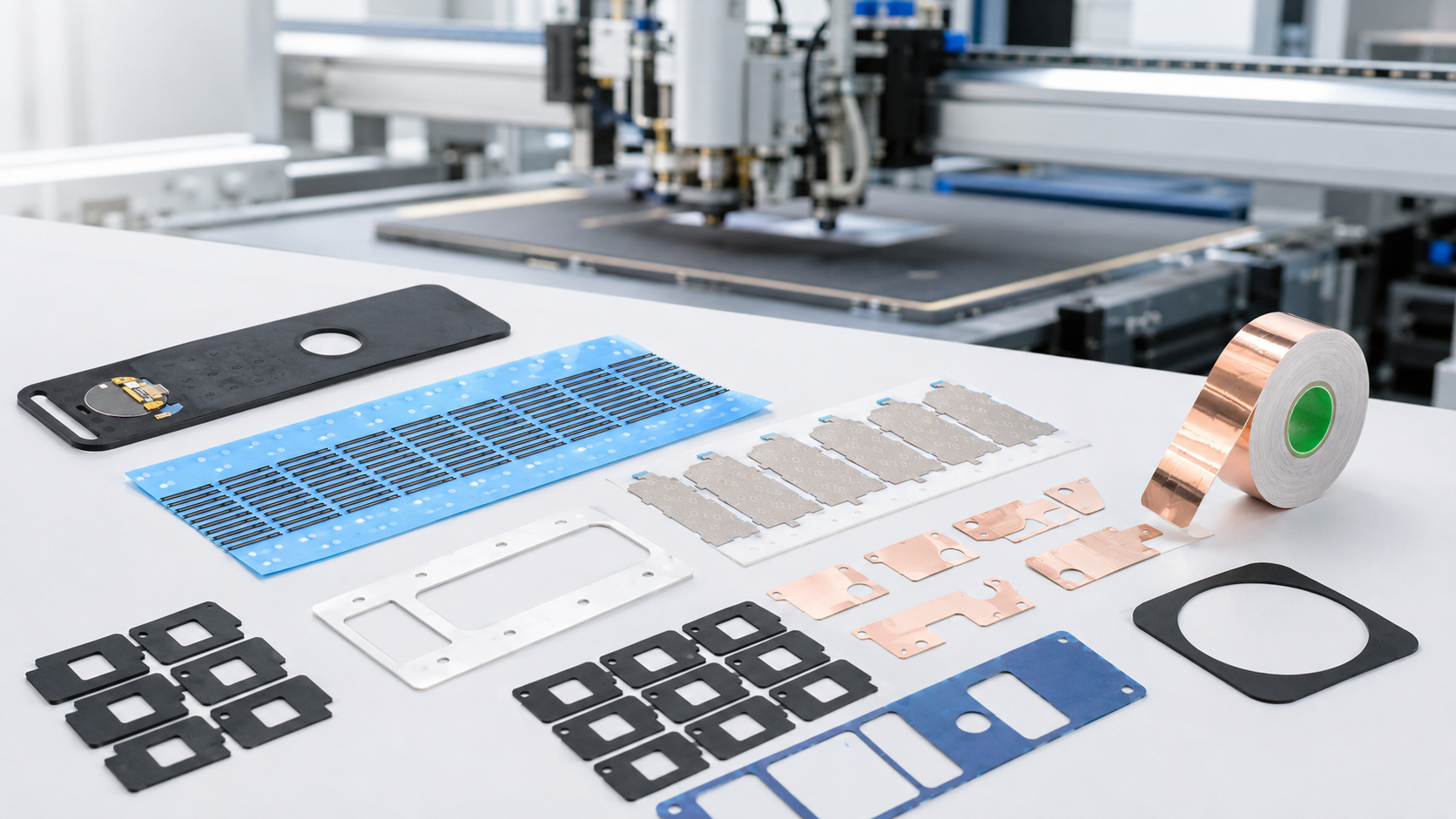
EMI shielding | Copper foil, aluminum foil, conductive fabric, conductive foam | Grounding parts, EMI gaskets |
Thermal management | Graphite sheet, thermal pad, thermal tape | Heat spreaders, thermal interface parts |
Protection | PET film, protective film, mesh | Surface protection films, dustproof mesh |
Applications of Custom Die Cut Components
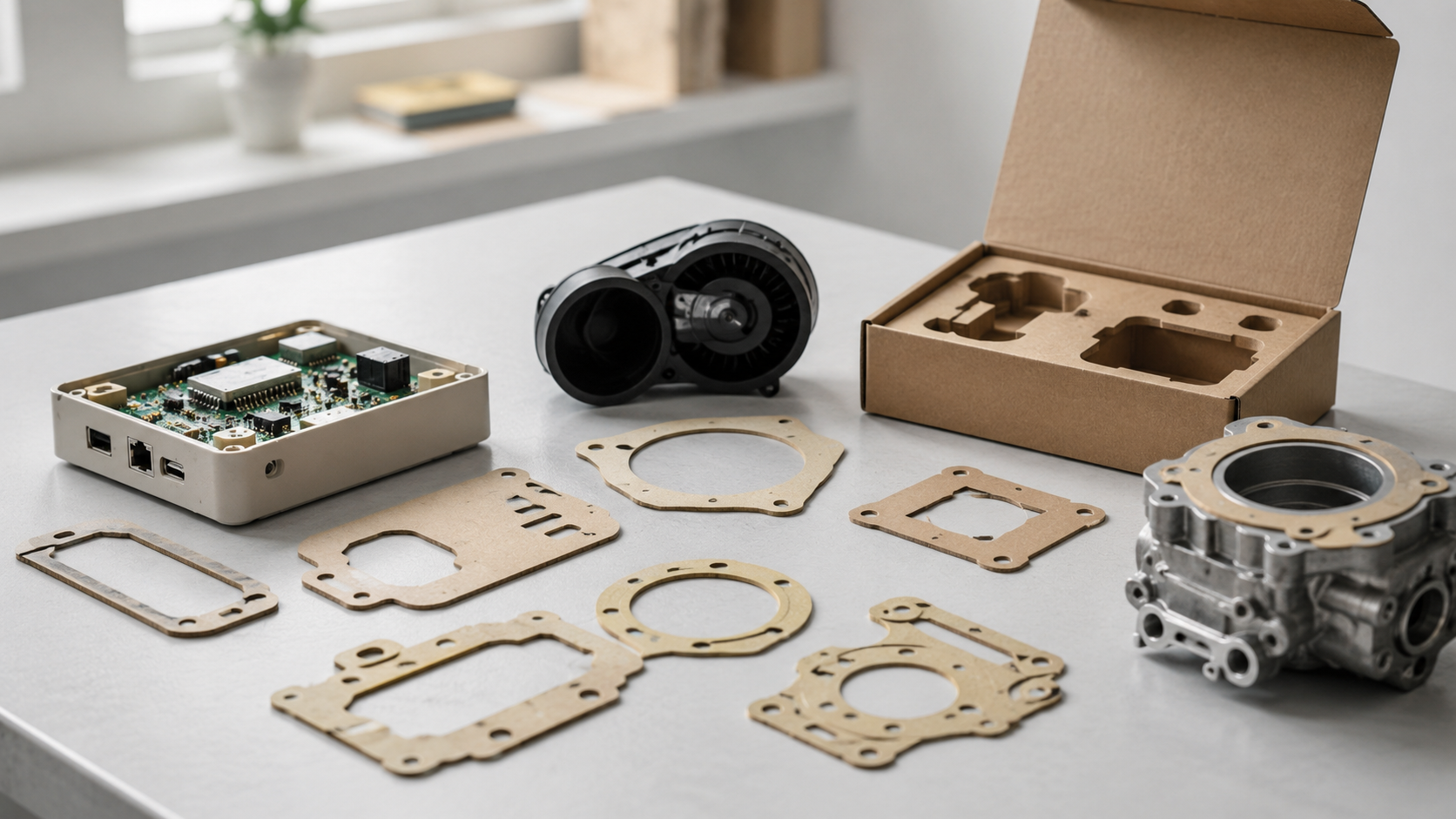
Custom die cut components are used in many industries where parts must be thin, lightweight, precise and easy to assemble.
Common applications include:
Consumer electronics: smartphones, laptops, tablets, TWS earphones and wearables
EV batteries: insulation sheets, sealing foams, thermal pads and protective films
Medical devices: adhesive films, foam pads and device assembly components
AI servers and communication equipment: EMI shielding, grounding and thermal materials
Robotics and drones: lightweight bonding, cushioning, insulation and protection parts
Smart home and security products: waterproof, dustproof, foam and adhesive components
As devices become smaller, more powerful and more integrated, die cut parts are increasingly used to combine multiple functions into one assembly-ready component.
Advantages and Limitations of the Die Cutting Process
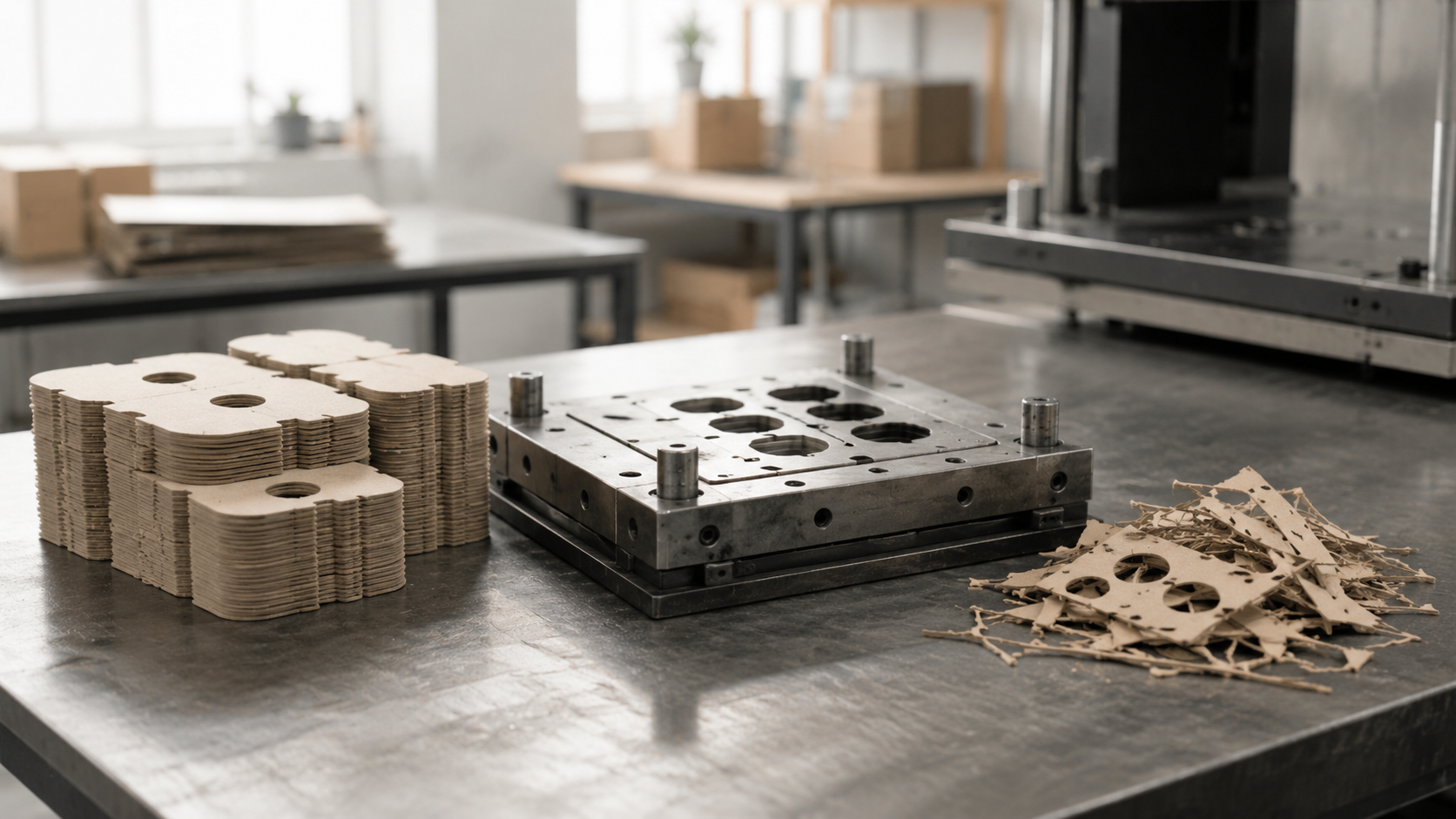
Advantages
Efficient for mass production
Suitable for flexible and multi-layer materials
Supports adhesive-backed parts and release liner formats
Improves assembly speed and consistency
Can integrate bonding, sealing, insulation, shielding and thermal functions
Supports sheets, rolls, trays and custom packaging formats
Limitations
Tooling may be required for mass production.
Very hard, brittle or thick materials may need other processing methods.
Small holes and narrow borders require engineering review.
Adhesive overflow, liner release and waste removal can affect yield.
Final tolerance depends on material, tooling, equipment and process control.
How to Request a Die Cutting Manufacturing Quote?
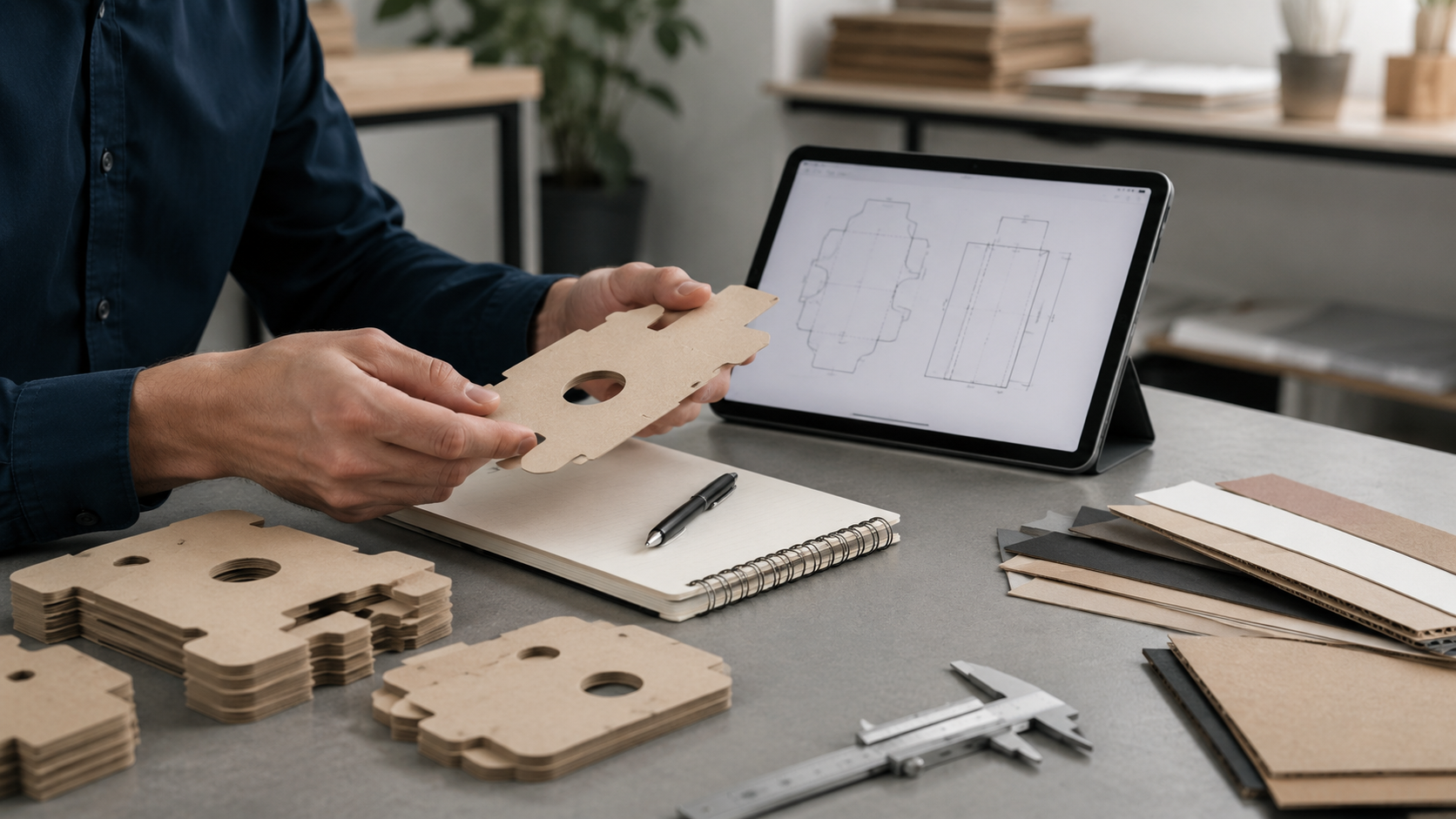
For accurate custom die cutting services, buyers should prepare the following information:
RFQ Item | What to Provide |
Drawing | PDF, DXF, DWG, STEP or AI file |
Material | Type, thickness, brand preference or performance target |
Function | Bonding, sealing, insulation, EMI shielding, thermal management or cushioning |
Quantity | Prototype, trial order or mass production volume |
Tolerance | Critical dimensions and acceptable tolerance range |
Application | Device type, working environment and assembly method |
Packaging | Roll, sheet, tray, liner direction, tabs or automated assembly format |
Quality needs | Inspection standard, test report, material certificate or traceability requirement |
If the material has not been confirmed, buyers can first describe the application problem. A capable engineering team can recommend suitable materials and process options.
How Xinyusheng Supports Die Cutting Manufacturing?
Xinyusheng provides precision die cutting services for functional components used in electronics, EV batteries, medical devices, robotics, drones, industrial control, communication equipment and smart devices.
The service process can include drawing review, material recommendation, engineering discussion, sample making, sample confirmation, mass production, full inspection, packaging and delivery.
Xinyusheng supports materials such as adhesive tapes, foams, PET and PI films, mesh, copper foil, conductive fabric, thermal materials, insulation films, silicone, rubber and protective films.
For buyers who need stable die cut components, early engineering review can help reduce sampling risks, improve production yield and shorten the path from concept to mass production.
FAQs About the Die Cutting Manufacturing Process
What is the manufacturing process of die cutting?
The die cutting manufacturing process includes material preparation, lamination, die cutting, release liner processing, waste removal, inspection, packaging and delivery.
What is the first step in die cutting production?
The first step is usually requirement review and raw material preparation. The supplier checks the drawing, material type, thickness, tolerance, quantity and application before production.
What is lamination in die cutting?
Lamination combines two or more material layers, such as adhesive, foam, film, foil or release liner, before cutting. It allows one die cut part to perform multiple functions.
What is waste removal in die cutting?
Waste removal means removing the unwanted material around or inside the cut part. It is especially important for adhesive parts, small holes and thin materials.
What is the difference between rotary and flatbed die cutting?
Rotary die cutting is better for roll materials and high-volume production. Flatbed die cutting is more flexible for samples, small batches, thicker materials and larger parts.
Why is full inspection important for die cut components?
Full inspection helps control dimensions, appearance, adhesive quality, liner condition and packaging accuracy. It reduces assembly risk for electronics, EV batteries, medical and industrial applications.
Conclusion
The die cutting manufacturing process is a complete converting workflow, not just a cutting step. From raw materials and lamination to die cutting, waste removal, inspection and delivery, every stage affects final part quality.
For B2B buyers, the best results come from clear drawings, suitable materials, realistic tolerance requirements and early engineering communication. If your project requires custom die cut components, share your drawing, material target and application needs with Xinyusheng to receive process recommendations and a custom quote.
Table of Contents
Related news
Company News
What Is Custom Precision Die Cutting? What Types of Custom Functional Components Is Xinyusheng Suitable For?
May 14,2026
Discover More
Company News
Custom Die Cut Gaskets: Materials, Design and Applications
July 17,2026
Discover More
Company News
EMI Conductive Die Cutting: Materials, Shielding and Applications
July 14,2026
Discover More
